contactus@caringkidsdental.com
Your Anxious Child at the Dentist: Evidence-Based Strategies That Work

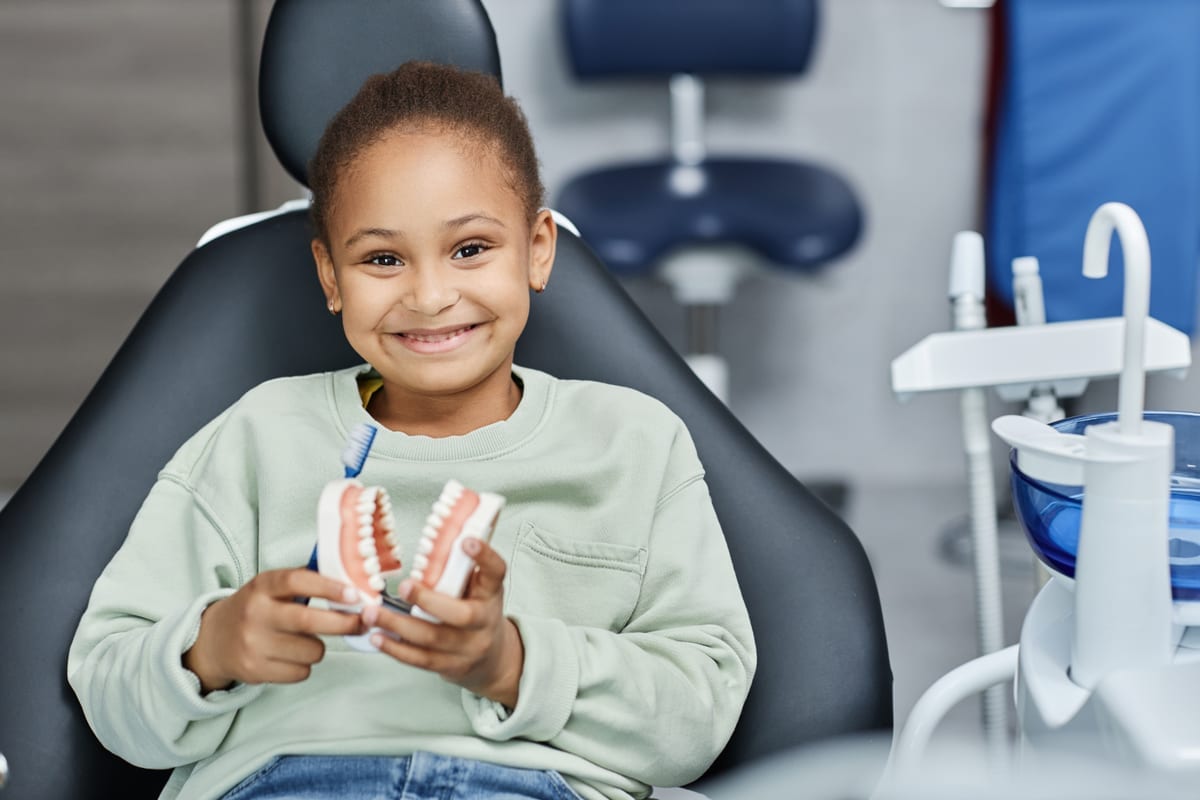
By Caring Kids Dental
Does your child cry, freeze, or beg to leave before the appointment even starts? You are not alone. Dental anxiety affects a large number of children across all ages. At Caring Kids Dental in Upland, CA, Dr. Christian Egbert sees anxious kids every day. Helping your anxious child at the dentist requires evidence-based strategies that work — not empty promises or candy rewards. This guide gives parents practical, research-supported tools to use before, during, and after every visit.
Why Children Develop Dental Anxiety in Upland and Beyond
Dental fear rarely comes out of nowhere. Most children develop anxiety from one of a few common sources. A previous painful experience is a leading trigger. Hearing a parent or sibling express worry about the dentist can also plant seeds of fear early.
Other children fear the unknown more than anything else. Unfamiliar sounds, smells, and tools can feel overwhelming. Some kids are simply more sensitive to sensory stimulation. Understanding the root cause helps parents choose the right calming strategy.
Research shows that parental anxiety directly transfers to children. If you feel nervous, your child will likely feel it too. Staying calm and matter-of-fact about appointments is one of the most powerful things you can do. Your emotional cues teach your child how to read the situation.
Evidence-Based Strategies to Help Your Anxious Child at the Dentist
Behavioral science offers several proven techniques for reducing dental anxiety in children. These are not tricks — they are methods used by pediatric dentists worldwide. Dr. Egbert and the team at Caring Kids Dental use many of these approaches daily. Learning them at home gives children a consistent, familiar experience.
Tell-Show-Do is one of the most studied methods in pediatric dentistry. The dentist explains a tool, shows it gently, and then uses it. You can practice this at home before appointments. Let your child hold a toothbrush mirror or pretend to count their teeth.
Positive reinforcement rewards brave behavior without using food as a prize. Stickers, praise, and extra screen time all work well. Avoid candy or sweets as rewards — they undermine the very reason for dental visits. Celebrate calmness and cooperation instead.
- Use calm, neutral language when talking about the dentist
- Avoid phrases like ‘it won’t hurt’ — this plants the idea of pain
- Read child-friendly books about dental visits before the appointment
- Role-play the appointment at home using a toothbrush
- Let your child bring a comfort item like a stuffed animal
- Arrive a few minutes early so your child can adjust to the environment
Distraction is another evidence-backed tool. Many pediatric offices now offer ceiling TVs, music, or audiobooks during treatment. Ask Caring Kids Dental what sensory accommodations are available. Small distractions significantly reduce a child’s perception of discomfort.
What to Do Before, During, and After the Visit
Preparation starts days before the appointment. Keep your language simple and positive. Say something like, ‘We are going to see Dr. Egbert so he can keep your smile healthy.’ Avoid over-explaining procedures your child has not asked about yet.
On the day of the visit, stick to your normal morning routine. Disruptions to routine increase anxiety in children. Feed your child a light meal and avoid sugary snacks beforehand. A calm morning sets the emotional tone for the entire visit.
During the appointment, let the dental team take the lead. Pediatric dentists like Dr. Egbert are specially trained to communicate with children. Avoid stepping in to over-reassure — this can signal to your child that something is wrong. Trust the process and stay relaxed in the chair or waiting room.
- After the visit, acknowledge your child’s bravery specifically
- Say things like ‘You held so still when Dr. Egbert counted your teeth’
- Avoid replaying any difficult moments in conversation
- Keep the post-visit tone positive and forward-looking
- Schedule the next appointment before leaving while the experience is fresh
Consistency builds confidence over time. Children who visit the dentist every six months become more comfortable with each visit. Skipping appointments because of anxiety actually makes the fear worse. Regular care is a key part of Care For Your Childs Teeth Upland and builds long-term trust between your child and their dental team.
How Caring Kids Dental in Upland Supports Anxious Children
Pediatric dental offices are designed differently from general dental offices. At Caring Kids Dental, the environment is intentionally child-friendly and low-stress. Bright colors, friendly staff, and a welcoming waiting room all reduce anxiety before treatment begins. First impressions matter enormously to children.
Dr. Christian Egbert completed advanced training specifically in child psychology and behavior management. He uses age-appropriate communication with every patient. A three-year-old and a twelve-year-old need very different explanations. This tailored approach is a hallmark of quality Preventive Dentistry Upland families rely on.
For children with severe anxiety, additional support options exist. Nitrous oxide, commonly called laughing gas, is a safe and effective option for many children. It reduces fear without putting children to sleep. The team will always discuss every option with parents before proceeding.
Sedation is never the first step — it is considered only when other strategies have not worked. The goal is always to help children develop real coping skills. Building genuine comfort with dental care protects your child’s oral health for a lifetime. Anxiety does not have to be a barrier to great dental care.
Tips for Parents of Very Young or Highly Sensitive Children
Toddlers and preschoolers experience dental anxiety differently than older children. They may not understand what the dentist does, which increases fear of the unknown. Starting dental visits early — around age one — helps normalize the experience. Early visits are typically brief and gentle, focusing on familiarity rather than treatment.
Children with sensory processing differences often have heightened dental anxiety. Bright lights, unfamiliar tastes, and the sensation of tools in their mouth can feel overwhelming. Sharing these sensitivities with the dental team before the visit is essential. Dr. Egbert and his team can adjust the approach to accommodate each child’s needs.
Never shame a child for being afraid. Phrases like ‘stop crying’ or ‘be brave’ can make anxiety worse over time. Acknowledge their feelings first — ‘I can see you feel nervous’ — then redirect gently. Validated children are far more cooperative than dismissed ones.
Frequently Asked Questions
At what age should I first bring my child to the dentist?
Most pediatric dentists, including Dr. Egbert at Caring Kids Dental, recommend the first visit by age one or when the first tooth appears. Early visits help children become comfortable with the dental environment before any treatment is needed. This significantly reduces anxiety in later childhood.
Is it okay to tell my child a dental visit will not hurt?
It is better to avoid making promises about pain. Saying ‘it won’t hurt’ introduces the idea of pain and can backfire if any discomfort occurs. Instead, use neutral language like ‘the dentist will look at your teeth and count them.’ Focus on what will happen, not on what won’t.
What if my child cries or refuses to open their mouth?
This is very common, especially in young children. Pediatric dentists are trained to work with resistant or tearful children. Try not to intervene too quickly — the dental team has techniques to help. Staying calm yourself is the most helpful thing a parent can do in the moment.
Can laughing gas help my anxious child?
Yes, nitrous oxide is a widely used and safe option for children with dental anxiety. It takes effect quickly, wears off fast, and helps children feel relaxed without losing consciousness. Dr. Egbert will evaluate whether it is appropriate for your child and explain the process fully before using it.
How can I help my child feel less anxious between dental visits?
Read books about dental visits, play pretend dentist at home, and speak positively about oral care in daily conversation. Maintaining a consistent brushing and flossing routine also builds familiarity with dental tools and sensations. Children who are comfortable with daily oral hygiene tend to be calmer at appointments.
Dental anxiety in children is manageable with the right support, patience, and professional care. Dr. Christian Egbert and the team at Caring Kids Dental in Upland, CA are here to make every visit as calm and positive as possible. You do not have to navigate this alone. Book Now to schedule your appointment with our team.