contactus@caringkidsdental.com
How Are Fluoride Treatments Different from Dental Sealants?


By Caring Kids Dental
When it comes to protecting your child’s smile, parents often hear about two common preventive options: fluoride treatments and dental sealants. While both play an important role in preventing cavities, they work in very different ways.
Understanding the difference can help you make informed decisions for your child’s oral health—especially if you’re raising a family in Upland, where busy school schedules and on-the-go snacks can increase cavity risks.
Why Preventive Dental Care Matters for Kids
Children are more prone to cavities than adults. Their enamel is still developing, and their brushing habits may not always be consistent. Add sugary snacks and drinks into the mix, and tooth decay can happen quickly.
Preventive care helps:
-
Strengthen developing teeth
-
Reduce the risk of cavities
-
Avoid costly dental procedures later
-
Build lifelong healthy habits
Two of the most effective preventive tools are fluoride treatments and dental sealants—but they serve different purposes.
What Are Fluoride Treatments?
Fluoride treatments are quick, non-invasive procedures that strengthen tooth enamel and make it more resistant to decay.
After your child’s dental cleaning, a concentrated fluoride gel, foam, or varnish is applied directly to the teeth. It only takes a few minutes but offers long-lasting protection.
In practices offering Fluoride Treatments Upland, this service is commonly recommended during routine visits, especially for children at higher risk of cavities.
How Fluoride Works
Fluoride:
-
Remineralizes weak spots in enamel
-
Slows down the growth of harmful bacteria
-
Can even reverse early signs of tooth decay
Best For:
-
All children, especially those prone to cavities
-
Early-stage decay prevention
-
Strengthening both baby and permanent teeth
What Are Dental Sealants?
Dental sealants are thin, protective coatings applied to the chewing surfaces of back teeth (molars). These teeth have deep grooves where food and bacteria can easily get trapped.
Sealants act like a barrier, sealing off those grooves and preventing decay from forming.
How Sealants Work
Sealants:
-
Physically block food and plaque
-
Smooth out deep grooves in molars
-
Provide long-term protection (often lasting several years)
Best For:
-
Children with newly erupted permanent molars
-
Back teeth that are hard to clean
-
Preventing cavities before they start
Key Differences Between Fluoride and Sealants
Understanding the distinction helps you see why dentists often recommend both—not one or the other.
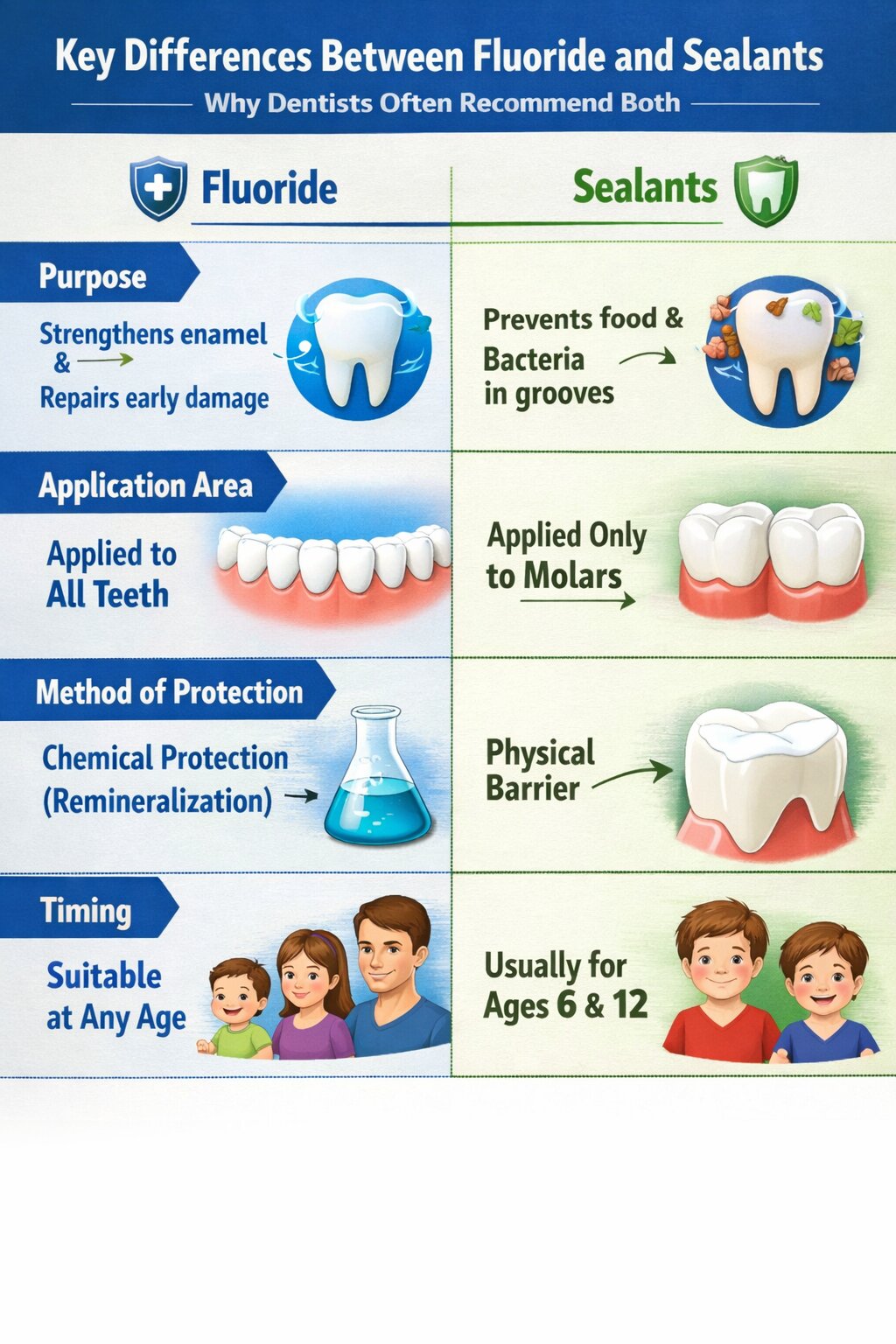
1. Purpose
-
Fluoride: Strengthens enamel and repairs early damage
-
Sealants: Prevents food and bacteria from settling in grooves
2. Application Area
-
Fluoride: Applied to all teeth
-
Sealants: Applied only to molars
3. Method of Protection
-
Fluoride: Chemical protection (remineralization)
-
Sealants: Physical barrier
4. Timing
-
Fluoride: Suitable at any age
-
Sealants: Usually applied when permanent molars come in (around ages 6 and 12)
Do Children Need Both?
In most cases—yes.
Think of fluoride as strengthening the entire tooth, while sealants protect the most vulnerable spots. Together, they provide a more complete defense against cavities.
Your child’s dentist may recommend a combination of both, especially if:
-
Your child frequently consumes sugary snacks
-
Brushing and flossing habits are still developing
-
There is a history of cavities
In local communities like Upland, where school lunches and sports drinks are common, combining these treatments can significantly reduce cavity risk.
What to Expect During the Visit
Both treatments are quick, painless, and stress-free for kids.
Fluoride Treatment:
-
Teeth are cleaned
-
Fluoride is applied with a brush or tray
-
Child avoids eating/drinking for a short time
Sealant Application:
-
Teeth are cleaned and dried
-
A special gel prepares the surface
-
Sealant is painted on and hardened with a light
No drilling. No discomfort. Just protection.
Local Insight for Upland Parents
Families in Upland often juggle school, extracurricular activities, and busy routines. This can make it harder to maintain perfect brushing habits every day.
Preventive treatments like Fluoride Treatments Upland become especially valuable in these situations, offering an extra layer of protection when daily routines aren’t always perfect.
Additionally:
-
Local water fluoridation levels may vary
-
Kids involved in sports may consume more sugary drinks
-
Quick, preventive visits can reduce long-term dental costs
Regular dental checkups every six months help ensure your child receives the right preventive care at the right time.
How to Decide What’s Right for Your Child
Every child is different, and the best approach depends on their individual needs.
Your dentist may recommend fluoride if:
-
Your child has early signs of enamel weakness
-
There’s a history of frequent cavities
-
Diet includes sugary or acidic foods
Sealants may be recommended if:
-
Permanent molars have erupted
-
Deep grooves are present in back teeth
-
Brushing misses hard-to-reach areas
A personalized dental exam is the best way to determine the right plan.
Common Questions Parents Ask
Are fluoride treatments safe for children?
Yes. Professional fluoride treatments are safe and carefully controlled. Dentists use the right amount based on your child’s age and needs.
Do sealants look or feel different?
No. Sealants are thin and usually clear or tooth-colored. Most children don’t even notice them.
How long do sealants last?
Sealants can last several years but should be checked during regular dental visits.
Can fluoride replace brushing?
No. Fluoride supports oral health, but daily brushing and flossing are still essential.
Are these treatments covered by insurance?
Many dental insurance plans cover preventive treatments like fluoride and sealants, especially for children.
Conclusion: Stronger Smiles Start Early
Fluoride treatments and dental sealants are not competing options—they’re complementary tools that work best together. One strengthens teeth from within, while the other shields them from outside threats.
For growing smiles, this combination can make a lasting difference in preventing cavities and maintaining healthy teeth.
If you’re looking for personalized, preventive dental care for your child, the team at Caring Kids Dental is here to help. Book your appointment today and give your child the protection their smile deserves.