contactus@caringkidsdental.com
My Child Has Severe Tooth Pain: Is This a Pediatric Dental Emergency?


By Caring Kids Dental
As a parent, seeing your child in pain is the most upsetting. When your child has severe pain in their tooth, it can be hard to tell if it’s something that needs urgent attention or if it’s just a temporary issue. There can be many reasons for a child to have tooth pain, from cavities to more serious matters, and knowing when to seek professional assistance can make all the difference.
Tooth pain may not seem like a big deal, but this condition can quickly become a sign of something more serious, requiring immediate care. If you ever find yourself in this situation, learning how to recognize a pediatric dental emergency can help you ensure your child receives the treatment they need. Whether it’s from a fall, an untreated cavity, or an infection, knowing what to do next is crucial for your child’s health.
When Is Tooth Pain a Dental Emergency?
There can be several reasons for severe tooth pain. Some of the more common are cavities, gum infections, abscesses, or Injuries. In most cases, the pain may be intermittent, but sometimes it can be intense, persistent, or worse at night, a red flag. Here are some signals that your child’s tooth pain might need immediate attention:
- Constant or Severe Pain: If your child is complaining of constant pain that does not go away with over-the-counter medication, this may indicate a more serious condition. Severe pain that interferes with sleep or activities of daily living should not be ignored.
- Swelling: Any visible swelling around the affected tooth or in the face is symptomatic of an infection. If your child’s face is swelling, it’s key to get care as soon as possible so the infection doesn’t spread.
- Sensitivity to Hot or Cold: Pain from hot or cold foods and beverages may indicate a dental problem, such as tooth decay or an exposed nerve, and requires prompt medical attention.
- Bleeding: If your child’s tooth pain is accompanied by bleeding gums or blood in their saliva, this indicates potential gum disease or trauma that should be treated immediately.
- Visible Injury: A cracked, chipped, or knocked-out tooth from a fall or accident requires a dentist’s attention as soon as possible to prevent further damage and preserve the tooth.
How To Ease Your Child’s Tooth Pain?
If your child has some tooth pain while waiting for an emergency pediatric dentist in Upland, there are a few things you can do at home to try to alleviate the discomfort:
- Use a Cold Compress: To minimize swelling and provide temporary pain relief, place a cold compress on the outside of your child’s cheek.
- Pain Relief: Nonprescription medications such as ibuprofen or acetaminophen can help reduce pain. Do follow the recommended dosage according to your child’s age and weight.
- Salt Water Rinse: If your child is old enough, rinsing their mouth with warm salt water can relieve discomfort and reduce inflammation.
- Avoid Certain Foods: Until you can see a dentist, try to keep your child away from very hot, cold, and sugary foods that may aggravate the pain.
How Does an Emergency Pediatric Dentist Treat Tooth Pain?
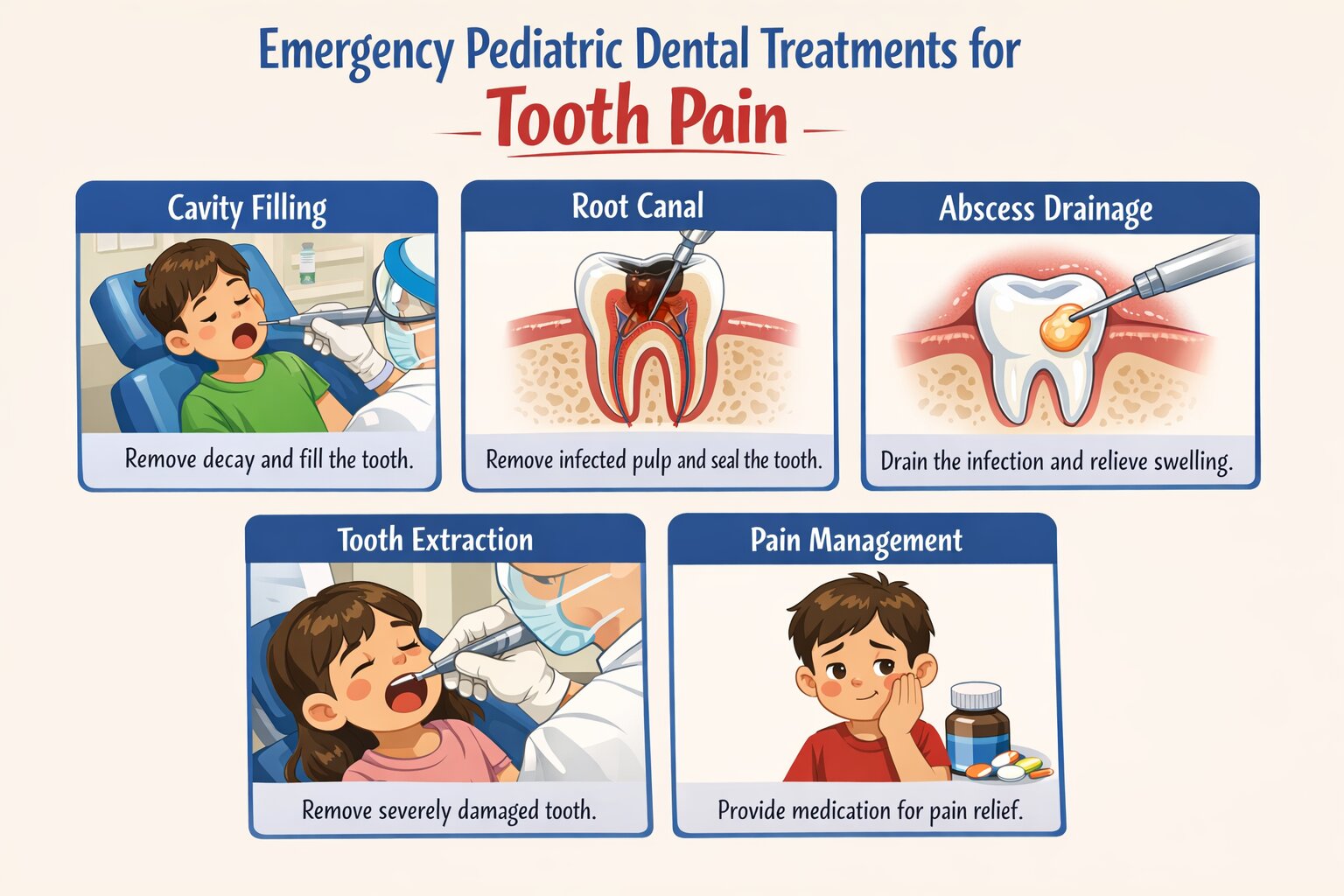
An emergency pediatric dentist in Upland can immediately address the source of your child’s tooth pain and alleviate their symptoms. Depending on how disabling your condition is, treatment can differ:
- Treatment for Cavity: If the pain is caused by a cavity, your dentist may remove the decayed area and fill it with a dental material to restore the tooth’s function.
- Root Canal: If the tooth pulp is infected or damaged, the root canal needs to be removed to remove the infected tissue and seal the tooth to prevent further damage.
- Abscess Drainage: If the pain is due to an abscess (a localized infection), your dentist may need to drain it before it spreads or causes other severe complications.
- Lost Tooth: Sometimes the tooth is too damaged to restore, and extraction may be the better choice. If so, the dentist will explain how to replace the lost tooth with a dental implant, a bridge, or another solution.
- Pain Management: It helps relieve your child’s pain by offering over-the-counter or prescribed medicine.
How Do I Know When to Visit an Emergency Pediatric Dentist?
Although some tooth pain can be postponed until a regular appointment, there are times when immediate care is needed. If your child’s toothache is severe, persistent, or accompanied by other alarming symptoms like swelling, fever, or bleeding, you’ll want to visit an emergency pediatric dentist in Upland. Early treatment can prevent complications and allow you to feel better, so do not hesitate to ask if you are unsure.
How Can I Prevent Dental Emergencies in My Child?
Though dental emergencies can’t always be prevented, there are ways to reduce the risk of severe tooth pain in your child:
- Routine Dental Checkups: Regular dental visits allow monitoring of your child’s teeth and the identification of potential problems, such as cavities or gum disease, that may cause pain.
- Proper Oral Hygiene: Make sure your kid brushes and flosses regularly to avoid tooth decay and gum disease, which can lead to pain and infection.
- Protective Gear: If your child plays contact sports, talk to them about wearing a mouth guard to help prevent dental damage.
- Diet: Minimize sugary snacks and beverages, which can lead to cavities and tooth decay, to maintain children’s oral health.
- Addressing Habits Early: Take your child to a dentist if they grind their teeth, have a misaligned bite, or have other harmful habits. The sooner the better: notify you and fix them before serious problems arise.
Taking Action for Your Child’s Comfort
Nothing is more heartbreaking than seeing a child in pain, and when your little one suffers from severe tooth pain, it can lead to an overwhelming amount of worry about whether you should just wait for the symptoms to subside or head into Upland emergency pediatric dentistry. It’s best to resolve dental emergencies preemptively to avoid lasting damage.
Don’t put off getting your child the help they need: If they are suffering from severe tooth pain, get in because it will just get worse. Call Caring Kids Dental today to make an appointment and provide your child with a pain-free, pleasant experience!
Questions People Ask About Pediatric Dental Emergency
- What should I do if my child’s tooth hurts badly?
If your child is in severe pain, consider using a cold compress and over-the-counter pain medication. Schedule an appointment with an emergency pediatric dentist if pain persists. - How can I tell if my child’s tooth pain is an emergency?
Signs of an emergency include constant or severe pain, swelling, bleeding, sensitivity to temperature, or a visible injury. Immediate dental care may be needed to prevent further complications. - Can a cavity cause severe tooth pain in children?
Yes, cavities can lead to significant tooth pain, especially if the decay reaches the tooth’s inner pulp, which can cause infection or inflammation. - How long should I wait before seeing a dentist for tooth pain?
If the pain is severe, constant, or accompanied by swelling or bleeding, seek immediate help from an emergency pediatric dentist. Delaying treatment can worsen the condition. - What are the signs that my child might need a tooth extraction?
If a tooth is severely damaged by decay, trauma, or infection, and it cannot be saved, extraction may be necessary. A pediatric dentist will assess whether this is the best option. - Can tooth pain go away on its own?
While mild tooth pain may improve with home remedies, severe or persistent pain requires professional care. It’s important to address any serious dental issues with a pediatric dentist as soon as possible.