contactus@caringkidsdental.com
The Preventative Impact of National Children’s Dental Health Month on Pediatric Emergencies

By Caring Kids Dental
Did you know that one of the best ways to avoid pediatric dental emergencies is through regular preventive care? February, recognized as National Children’s Dental Health Month (NCDHM), brings an essential opportunity to teach kids and parents about the importance of good oral health habits that help prevent dental issues from escalating into emergencies. At Caring Kids Dental, we believe that early intervention is key to reducing dental crises.
In this blog, we’ll explore how NCDHM helps to raise awareness about preventive measures, why these steps are crucial for children’s oral health, and how they significantly decrease the likelihood of future pediatric dental emergencies.
By the end of this post, you’ll have a better understanding of the vital role prevention plays in keeping your child’s smile healthy, and why it’s so important to act now.
What is National Children’s Dental Health Month?
National Children’s Dental Health Month (NCDHM) is an annual observance that takes place every February, aimed at educating children, parents, and caregivers about the importance of good oral hygiene and its connection to overall health. Organized by the American Dental Association (ADA), this month-long celebration focuses on the prevention of dental issues that can lead to long-term health problems.
The history of NCDHM dates back to 1949, when it was first recognized to highlight the significance of oral care for children. Over the years, it has grown into a comprehensive national campaign that unites dental professionals, educators, and parents to promote healthy habits in children.
During this month, dental offices like Caring Kids Dental offer free dental screenings, educational materials, and fun events that encourage children to embrace a positive relationship with their oral health.
For parents and caregivers, NCDHM offers the perfect opportunity to prioritize their child’s dental health. It serves as a reminder to schedule regular check ups, incorporate daily oral hygiene routines, and ensure kids understand the importance of their smile. With local events and partnerships, it becomes a community-wide effort to ensure that all children start their journey to healthy teeth and gums.
How NCDHM Promotes Preventive Care in Children’s Dentistry
One of the key initiatives of NCDHM is its educational outreach programs. Schools, dental offices, and local organizations work together to host events that educate kids about the importance of brushing, flossing, and visiting the dentist regularly. Caring Kids Dental participates by offering free consultations and hosting fun, interactive workshops to teach kids how to properly care for their teeth.
Through these events, children are introduced to simple but effective preventive measures, such as:
- Regular Check ups: Scheduling a dental visit every six months ensures that any potential problems are caught early.
- Brushing and Flossing: Kids are taught the importance of brushing twice a day with fluoride toothpaste and flossing once a day to prevent plaque build up.
- Fluoride Treatments: Fluoride helps to strengthen the enamel and prevent cavities, offering an extra layer of protection against tooth decay.
- Dental Sealants: This thin plastic coating applied to the chewing surfaces of back teeth helps prevent cavities in hard-to-reach areas.
In addition to these activities, NCDHM encourages fun contests, themed events, and educational videos that aim to reduce the fear and anxiety surrounding dental visits, empowering children to take pride in their oral health and see it as part of their overall well-being.
Link Between Preventative Care and Reduced Pediatric Dental Emergencies
Routine dental care is not only essential for maintaining a bright smile. It also helps reduce the likelihood of pediatric dental emergencies. Caring Kids Dental emphasizes that preventive visits can help address small issues before they become big problems, avoiding the need for urgent intervention later.
Regular dental visits ensure that common issues such as cavities, gum disease, or misaligned teeth are caught early. These conditions, if left untreated, can result in painful situations like abscesses, tooth loss, and infections, each of which often requires an emergency pediatric dentist in Upland. Moreover, dental check ups can identify potential issues that parents may not notice, such as tooth grinding, which could lead to damaged teeth or jaw pain.
For example, dental sealants and fluoride treatments not only prevent cavities but also reduce the risk of painful toothaches or infections that often require emergency care. These treatments, when implemented early, act as the first line of defence against tooth damage, reducing the need for costly and painful dental emergencies.
Real-Life Impact: How Early Intervention Can Save Kids from Pain and Trauma
Prevention truly works. In fact, research and case studies show that children who maintain regular dental visits are far less likely to experience dental emergencies. One case at Caring Kids Dental involved a young patient who came in for a routine check up and was found to have early signs of cavities between their molars. With the application of fluoride and dental sealants, the cavities were prevented from progressing, sparing the child from a painful emergency procedure.
Statistics also support this: According to the CDC, children who regularly visit the dentist are 60% less likely to suffer from serious dental issues compared to children who do not. Early intervention allows pediatric dentists to catch potential issues while they are still manageable, saving families time, stress, and money.
Pediatric dentists agree that maintaining preventive care from an early age fosters long-term oral health. “By starting early and maintaining a strong foundation of preventive care, children are more likely to avoid not just dental emergencies, but also other health issues related to poor oral hygiene,” says Dr. a pediatric dentist at Caring Kids Dental.
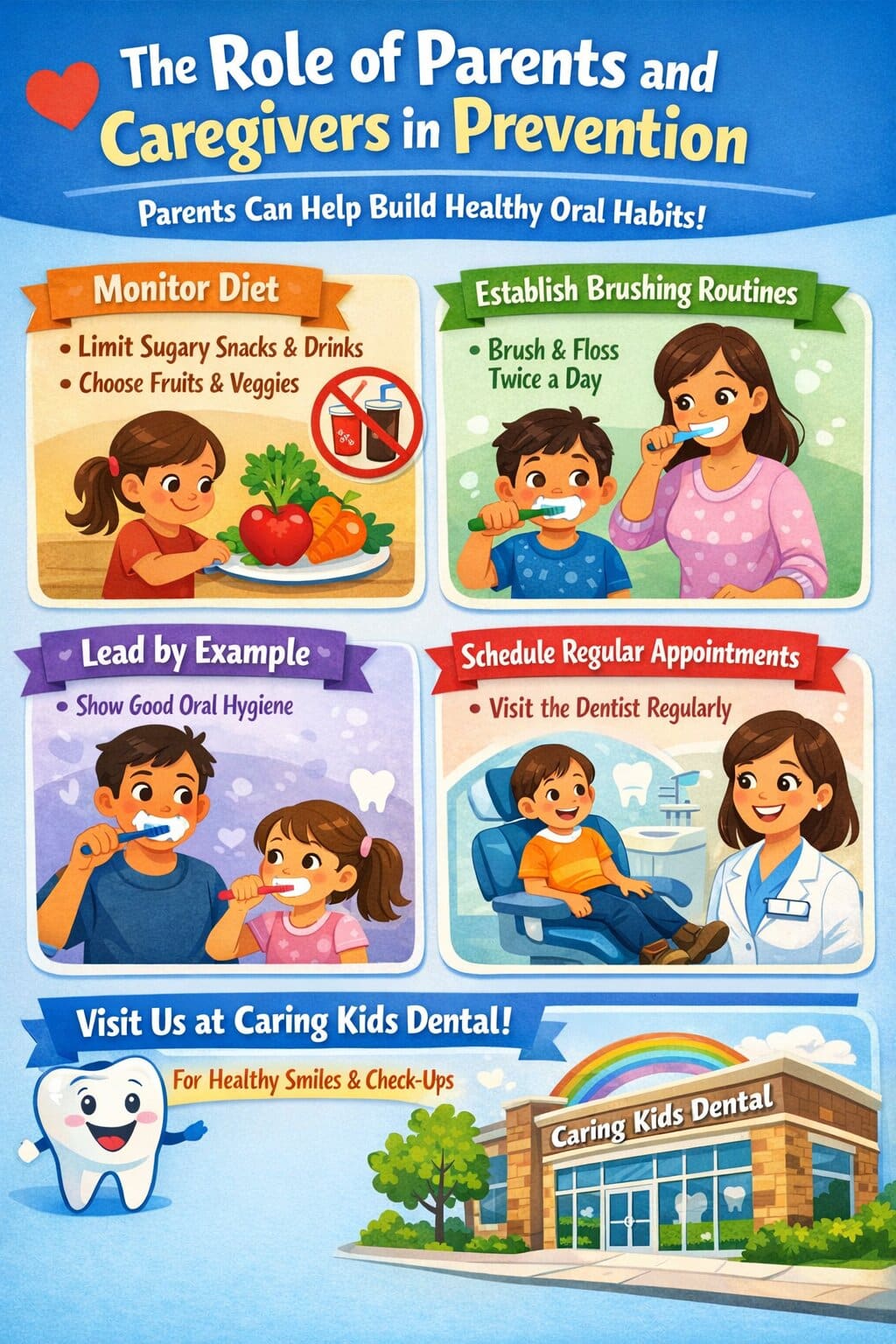
The Role of Parents and Caregivers in Prevention
As the first line of defense, parents and caregivers play a critical role in encouraging children to adopt healthy oral habits. Aside from supporting NCDHM’s message of education, parents can:
- Monitor Diet: Reducing sugary snacks and drinks can significantly decrease the risk of cavities. Offer healthy alternatives like fruits and vegetables, which promote oral health.
- Establish Brushing Routines: Make brushing and flossing part of the daily routine to instil the habit early.
- Lead by Example: Children often mimic their parents’ actions. Demonstrating good oral hygiene will encourage them to do the same.
- Schedule Regular Appointments: Make sure to schedule regular dental check-ups at Caring Kids Dental—these are key to ensuring your child’s long-term oral health.
Regular appointments and at-home practices go hand-in-hand in supporting children’s dental health, ensuring they can enjoy a lifetime of healthy smiles free from unnecessary dental crises.
The Benefits of Celebrating National Children’s Dental Health Month Beyond the Month Itself
Though National Children’s Dental Health Month is celebrated in February, its impact should extend throughout the year. The lessons learned in February are meant to be adopted as lifelong habits, providing ongoing benefits to your child’s dental health. By taking part in NCDHM activities, children and parents are reminded that oral health is important every day- not just once a year.
Instilling good habits at an early age ensures that children grow up with a strong foundation for maintaining their teeth, reducing the need for emergency dental care in the future. The long-term benefits of preventive care include not only healthy teeth but also a reduced risk of systemic health issues, such as heart disease, which have been linked to poor oral hygiene.
Preventive care is the key to avoiding pediatric dental emergencies, and National Children’s Dental Health Month serves as an excellent reminder to prioritize our children’s oral health. By attending events, practicing good oral hygiene, and scheduling regular check ups with a trusted pediatric dentist like Caring Kids Dental, parents can help ensure their children’s smiles stay healthy and bright.
If you haven’t already, schedule your child’s next dental check up today and take advantage of the lessons learned from NCDHM. Don’t wait for an emergency. Take proactive steps to secure your child’s long-term oral health!
People Also Ask
How often should my child visit the dentist?
It’s recommended that children visit the dentist every six months for regular check ups and cleanings to prevent issues from becoming emergencies.
Can preventive dental care really reduce the need for emergency treatment?
Yes! Regular check ups, early intervention, and good oral hygiene habits can catch problems early, reducing the risk of painful and costly dental emergencies.
How can I help my child maintain good oral hygiene at home?
Encourage your child to brush twice a day with fluoride toothpaste, floss daily, and avoid sugary snacks to reduce the risk of cavities and other dental issues.
What are the signs that my child needs emergency dental care?
Severe tooth pain, bleeding, a knocked-out tooth, or visible damage to teeth are common signs that require immediate attention from a pediatric dentist.
How does NCDHM help educate parents and children about dental health?
NCDHM offers free screenings, events, and educational materials that teach children and parents about the importance of daily oral care and regular dental visits.